
5 Strength and Balance Exercises for Seniors
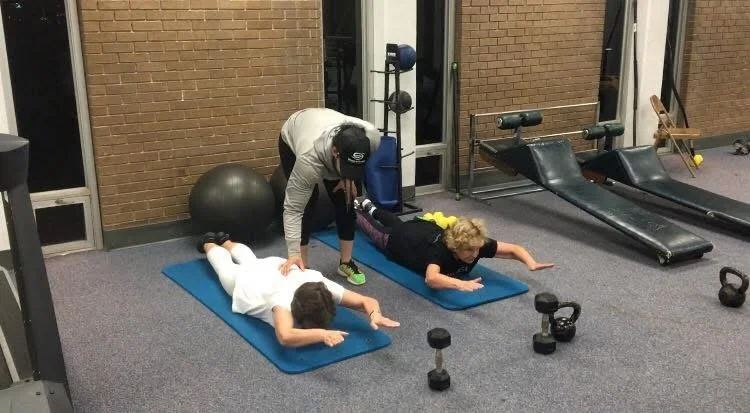
Clients Strengthening the Lower Back
Getting out of a chair, climbing steps, and carrying groceries all require strength. Moving confidently through those activities also takes balance, coordination, and awareness of where your body is in space.
At Profectus Athletics, we bring those skills together. These five strength and balance exercises for seniors are movements we use with our older clients, adjusted to each person’s abilities and experience.
We begin with agility ring drills to warm up and practice foot placement, then move through sit-to-stands, low box step-ups, cable rows, and suitcase carries. The goal isn’t a complicated workout. It’s building physical abilities that support everyday independence.
1. Agility Ring Drills for Coordination and Foot Placement
We often start with simple stepping patterns in and around an agility ring. This gets clients moving while giving them a chance to focus on where and how they place their feet.
“Agility” doesn’t have to mean fast. We prioritize deliberate steps and a comfortable rhythm before adding complexity.
These drills also practice proprioception, your sense of where your body is in space. Coordinating a step into or around a target asks you to judge position and control your movement.
How it connects to daily life: Intentional foot placement matters when changing direction, navigating a tight space, or stepping around an obstacle.
We adjust the stepping pattern and pace to the individual, with support available when needed.
2. Sit-to-Stands for Everyday Leg Strength
Sit-to-stands turn an everyday movement into purposeful strength training. Clients begin seated, stand up, and return to the seat with control.
This exercise trains the legs and hips through a movement people use throughout the day. It’s also easy to adapt: we can change the seat height, provide hand support, or add resistance when appropriate.
How it connects to daily life: Getting up from a dining chair, couch, or toilet requires the ability to lift your body from a seated position.
We focus on a steady stand and a controlled return rather than rushing through repetitions. NHS Inform includes sit-to-stands in its strength and balance exercise guidance.
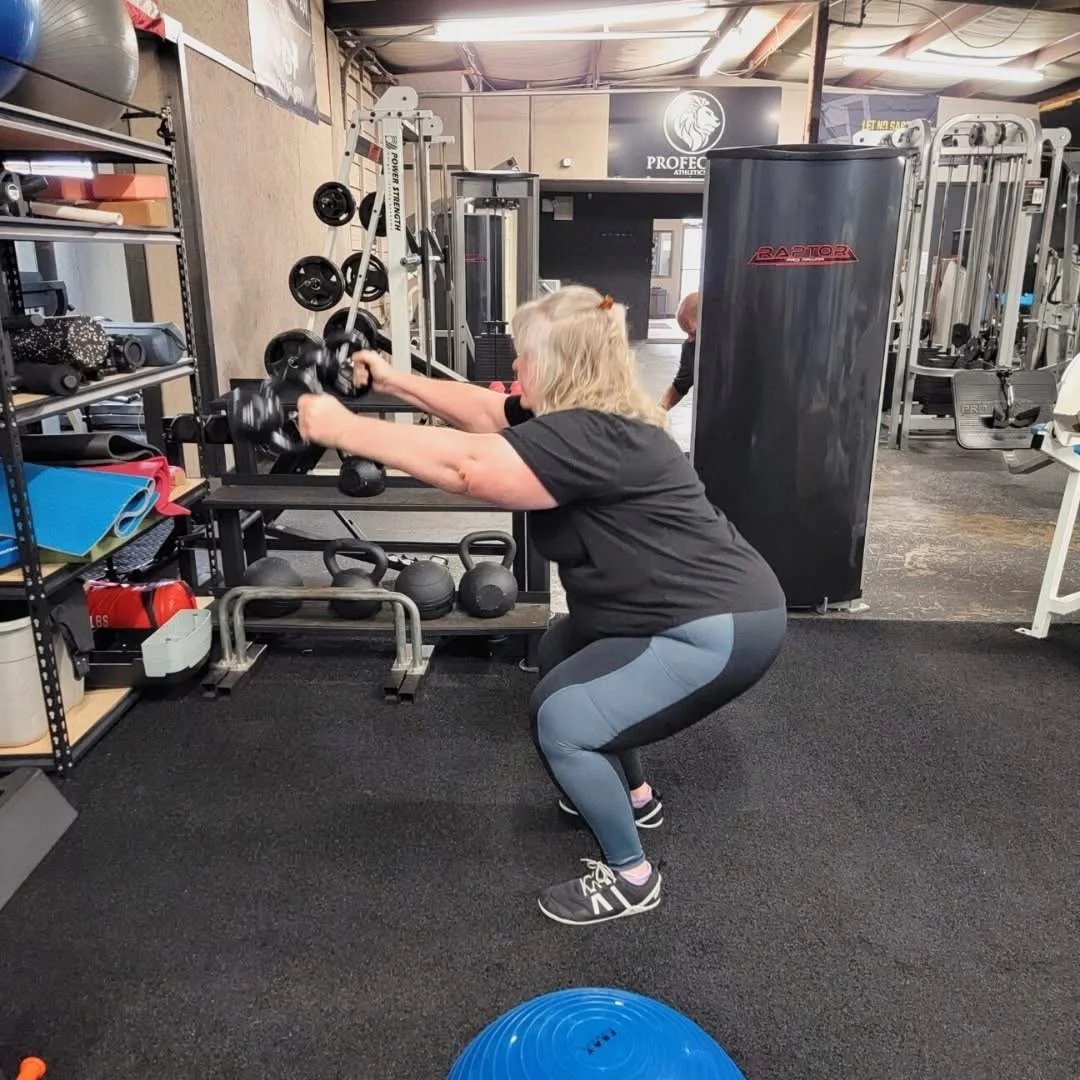
A client that has progressed from sit-to-stands, to bodyweight squats
3. Low Box Step-Ups for Strength and Balance
Low box step-ups involve stepping onto a stable, raised surface and returning to the floor with control.
The movement challenges leg strength while requiring a shift in body weight over the supporting foot. We begin with a manageable height and provide stable support when needed.
How it connects to daily life: Stairs, curbs, and small changes in elevation require you to raise and lower your body while maintaining control.
A taller box isn’t automatically better. We choose a height that allows the client to move well, then progress when they’re ready.
4. Cable Rows for Upper-Body Strength
Strength training for older adults shouldn’t focus only on the legs. Cable rows train the upper back and arms through a controlled pulling movement.
Adjustable resistance lets us choose an appropriate starting point and gradually increase the challenge. We coach a steady pull and a controlled return, without jerking the weight or leaning back to move it.
How it connects to daily life: Pulling open a door or bringing an object toward your body requires upper-body pulling strength.
Depending on the client, we can use a seated position or another stable setup to keep the focus on the movement.
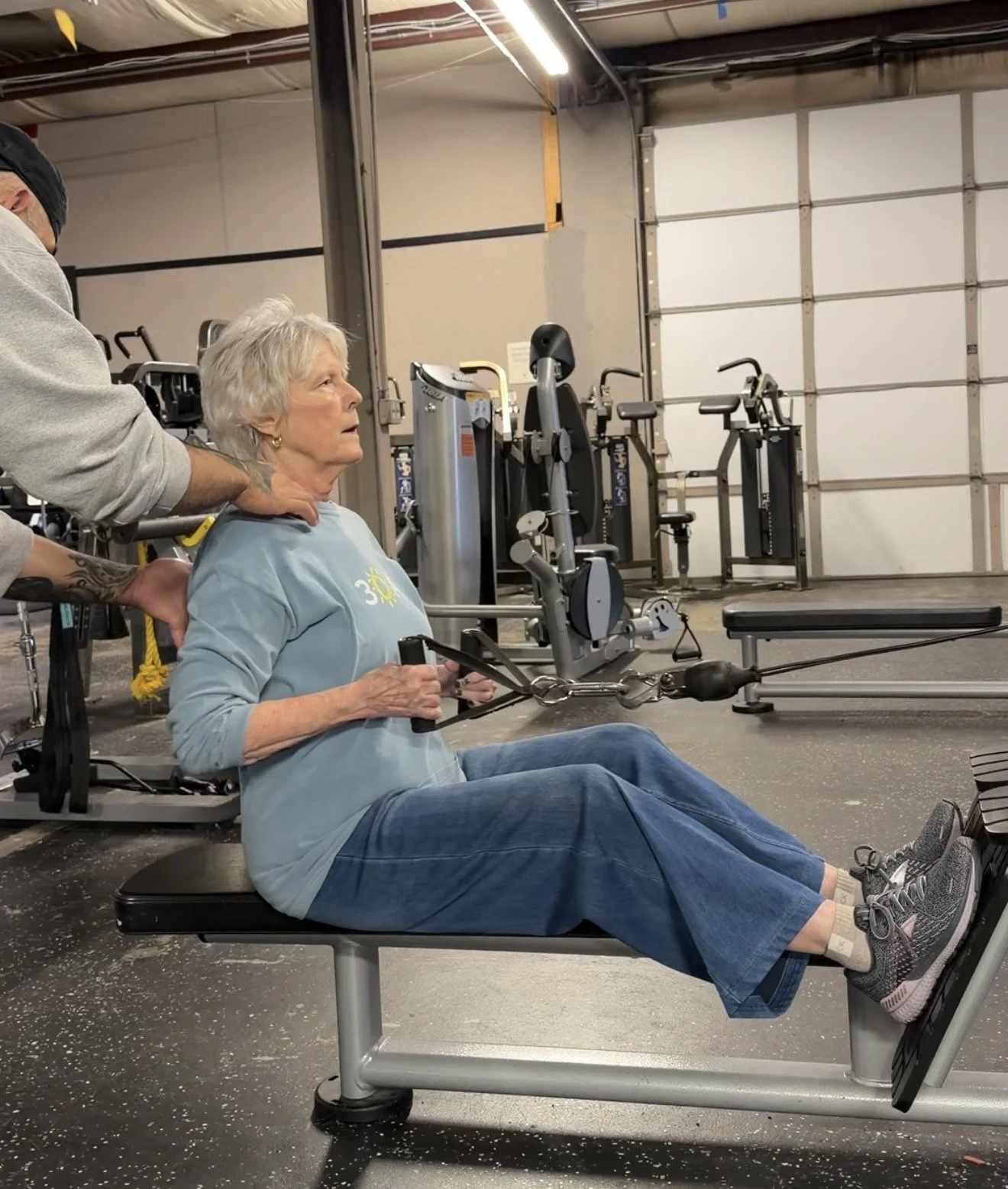
Client being coached and cued while performing cable rows
5. Suitcase Carries for Grip and Trunk Control
We finish with suitcase carries: walking a controlled distance while holding a weight at one side.
The one-sided load challenges grip strength and the muscles that help keep the torso upright. Clients practice walking steadily without leaning toward or away from the weight, then switch sides.
How it connects to daily life: Carrying a grocery bag or another one-sided load requires you to manage weight while moving.
We choose the weight and distance based on the client’s ability to maintain control. Heavier isn’t better if it changes the way they walk.
Why We Combine Strength, Balance, and Coordination
Everyday movement rarely uses just one physical skill. Climbing a step takes leg strength, but it also requires weight shifting and foot placement. Carrying a bag takes grip strength along with control while walking.
That’s why we train these abilities together rather than treating them as unrelated goals.
This sequence is a look at how we coach, not a one-size-fits-all workout prescription. The right support, resistance, and progression depend on the person.
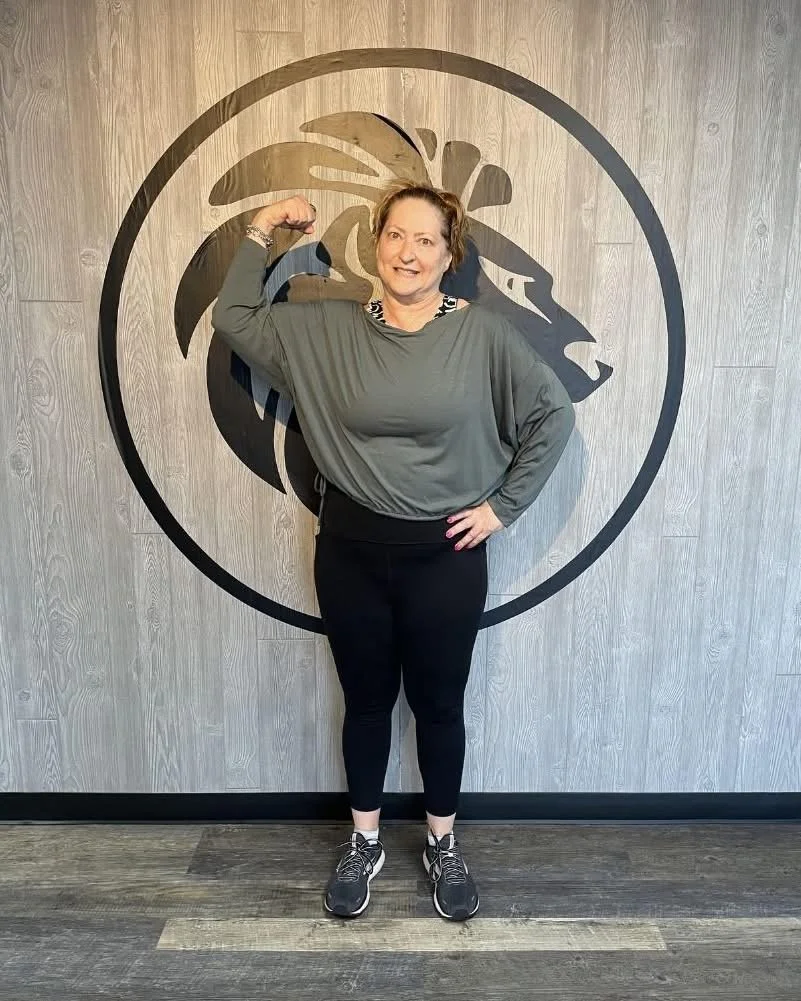
A stronger, better you!!
Getting Started Safely
Use a clear space, stable equipment, and appropriate support. If you have a history of falls, dizziness, recent surgery, or a condition that affects exercise, speak with your healthcare professional about any restrictions before starting.
Exercises should be adjusted to your abilities. Stop if you experience pain, dizziness, or feel unsafe.
Build Strength for Life Outside the Gym
Training doesn’t need to be flashy to be useful. Practicing foundational movements can help you work toward getting up more easily, managing steps, and carrying everyday items with greater confidence.
Want to feel stronger and steadier in everyday life? Contact Profectus Athletics at 501-864-4183 or email admin@profectusathletics.com to schedule a free first session and explore training built around your abilities and goals.